

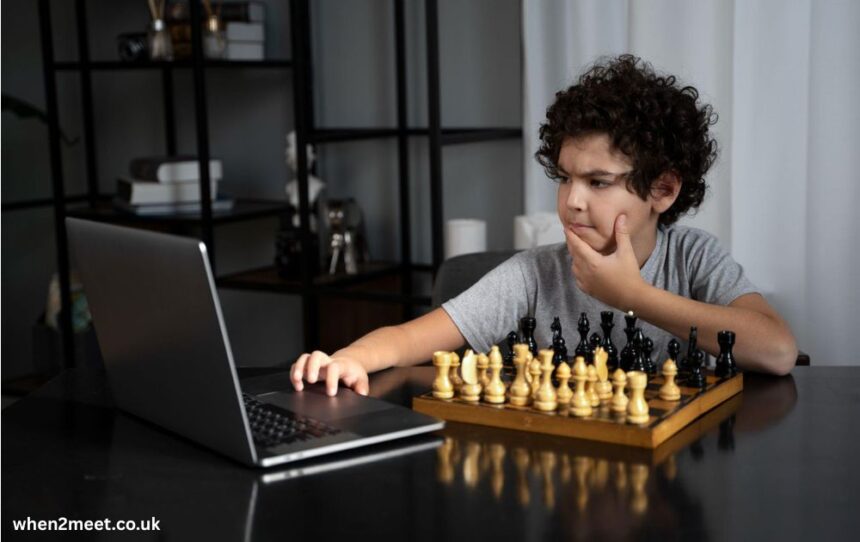
Many people believe that chess is a calm and rational game, and at first glance, there is nothing emotional about it. However, the experience of people who play chess online often shows a completely different opinion.
In online chess, your rating is always visible. After each game, it changes instantly. A small green number is perceived as progress. A red one is perceived as personal failure. Over time, many players begin to associate this number with their real strength — or even with their personality.
This constant feedback affects your mood: winning streaks bring confidence, while losing streaks can cause disappointment and impulsive decisions. In a traditional setting, breaks between rounds slow down this process, but in virtual chess, the rate rarely slows down. Let’s take a look at how chess sites affect the psychological state of the player, what to do about it, and how to enjoy playing chess online.
The Psychology of Online Chess
Playing the game of chess online can create stressors that don’t exist in the traditional environment. When you play offline with an actual chess board and pieces, you can benefit from having breaks between matches and social interactions with opponents. This is not the case with web chess, as the environment is set up for constant play, with instant matchmaking, instant rematch, and milliseconds between games, which promotes emotional responses rather than rational thinking.
This is evident in the many reports of stress and obsession with “winning back rating” after losing, which is an addictive behavior, as seen with many competitive online video games.
Another stressor is the instant gratification or, conversely, instant disappointment experienced in online chess. Most online chess arenas show instant rating changes as soon as the match is completed, and you get an instant emotional response based on the outcome: green for winning, red for losing.
This instant reward/punishment creates stress and the instant pressure to maintain or improve the rating. It also prevents you from taking the time to reflect on their thinking process, as the pace is too quick, promoting impulsive responses rather than rational thinking.
Why Blitz Is Bad for Improving in Online Chess
In blitz games, where each player is given 3-10 minutes, time pressure is heightened many times more than in other games. Research into time pressure and its effect on chess games has shown that when time is limited, players rely on instant pattern recognition and intuition. While this might work for stronger players, it can lead many beginners into a whole mess of superficial moves and mistakes.
In online blitz games, time pressure is the main obstacle. Players, in their haste, often forget even basic strategic concepts. One consequence of this is that it can create short-term emotional reactions, especially when a player loses. The other consequence is that it can prevent players from learning from situations, as this would take time. Many blitz players see their ratings fluctuate wildly and can feel like they are caught in a cycle.
Another factor is that blitz games can create more tilt, or rather, more tilt than other games. Tilt is when a player’s emotions get in the way, making them play even worse in their next games. With losses coming fast and furious, it’s not hard to get caught up in a cycle of bad play.
How Rapid Time Control Helps to Improve in Chess
In comparison to blitz, rapid time controls range from 10 to 60 minutes per player. It provides more time for thinking, time to interweave other chess concepts like exact calculation, weighing of moves, and strategic thinking. An examination of online chess decision time trends proves that stronger players take more time during critical phases, which indicates cognitive processing.
Rapid games provide a buffer against impulsive decision-making. Unlike making impulsive moves or jumping into a sacrifice, rapid games provide time for re-evaluating candidate moves and weighing strategic plans. Rapid games reduce impulsive decision-making and provide a cushion against mistakes.
From a psychological standpoint, time helps reduce the emotional impact of mistakes. Recognizing mistakes and having time to process them helps prevent spillover from one game to the next. Over time, this helps develop a more profound chess understanding than the rapid pace of blitz.
How to Stop Tilt and Rating Loss in Online Chess
Now, to the good part. You should and can avoid emotional distress during any match on chess websites. To do this, you need to follow basic rules that help to reduce tilting and help prepare for the next game.
- Practical rule one: Take a break after two straight losses. Many rating drops come from playing on after losing two in a row due to frustration rather than skill level. The next game may feel like it is right around the corner in an online setting, but taking a short break to regroup is far more beneficial than trying to win back rating in the next match.
- Rule two: Don’t confuse your rating with yourself. Your rating is based purely on your past performances. Losing streaks of two to three games occur to anyone due to natural variability in skill level between players. Even highly skilled players face rating fluctuations.
- Rule three: Take a look at one of your losses before playing your next match. Looking back at your last match will change your perspective from tilt to learning. Instead of thinking about losing rating points, you’ll be focused on having misjudged your opponent’s position.
Another good strategy is to stick to one type of time control in the game. Switching between bullet, blitz, and rapid time control creates unpredictable swings in your decision-making process and, thus, overloads you emotionally. By sticking to one type of time control when you Play Chess Online, your decision-making process will be far steadier.
Lastly, your environment should be set up to help you perform well. Disabling chat boxes that might distract you is important. Also, avoid playing when you’re tired. Online chess is a very competitive environment, especially in arena style. However, it is your self-discipline that may determine your success far more than your skill level.
Best Places to Play Competitive Online Chess in an Arena Format
Well, if online chess evokes emotions, it doesn’t necessarily mean that it is bad. It is simply the natural result of a competitive environment. The difference is in the way it is conducted. When the games have proper time controls, structures, and a proper sense of competition, the emotional aspect of the game is not a distraction but part of the game.
Having a proper environment changes the way you think about the game. Instead of playing for rating points in any way possible, you should compete in defined events with proper opponents and in the right conditions. It helps calm the emotional aspect of the game and get back to the game.
If you’re an online chess player who wants a more disciplined and competitive environment, it is best to play on sites that promote tournament play and fair play. If you wish to have that kind of environment, you can play chess online in a professional arena setting designed for proper and competitive play. The right environment will not eliminate the pressure, but can turn it into motivation.
Online chess will always have an emotional aspect, but the question is, will the emotion control you, or will you learn to control the emotions as you get better?